Health authorities have warned that an overabundance of information can make it harder for people to obtain reliable guidance about the coronavirus pandemic.
Helping the world make sense of this information requires a broad response, involving scientists, journalists, public figures, technology platforms and many others. Here are some ways we plan to help.
Supporting coronavirus fact-checking and verification efforts
We’re providing $6.5 million in funding to fact-checkers and nonprofits fighting misinformation around the world, with an immediate focus on coronavirus.
Collaboration is a crucial component of journalism’s response to a story as complicated and all-encompassing as COVID-19. For this reason, the Google News Initiative (GNI) is stepping up its support for First Draft. The nonprofit is providing an online resource hub, dedicated training and crisis simulations for reporters covering COVID-19 all over the globe. First Draft is also using its extensive CrossCheck network to help newsrooms respond quickly and address escalating content that is causing confusion and harm. We’re also renewing our support for the collaborative verification project Comprova in Brazil.
As fact-checkers address heightened demand for their work, we are providing immediate support to several organizations. Full Fact andMaldita.es will coordinate efforts in Europe focused on countries with the most cases (Italy, Spain, Germany, France and the United Kingdom) to amplify experts, share trends, and help reduce the spread of harmful false information. In Germany, CORRECTIV will step up its efforts to engage citizens in the fight against misinformation.
LatamChequea, coordinated by Chequeado, is providing a single hub to highlight the work of 21 fact-checking organizations across 15 countries in the Spanish-speaking world and Latin America. With our support, PolitiFact and Kaiser Health News will expand their health fact-checking partnership to focus on COVID-19 misinformation.
Increasing access to data, scientific expertise and fact checks
Access to primary expert sources during an evolving public health crisis is both challenging and fundamental for journalists covering the story. To make this easier, we’re providing funding to SciLine, based at theAmerican Association for the Advancement of Science, and the Australian Science Media Centre, creators of Scimex.org. We’re supporting the creation of a database for reporters developed by the journalism technology nonprofit Meedan in partnership with public health experts.
The GNI is also supporting the JSK Journalism Fellowships at Stanford University and Stanford's Big Local News group to create a global data resource for reporters working on COVID-19. The new project will collate data from around the world and help journalists tell data-driven stories that have impact in their communities.
The International Fact-Checking Network (IFCN) continues to advocate for fact-checkers worldwide; our renewed support will boost their efforts to uphold best practices in the fact-checking field and showcase the work of the CoronaVirusFacts alliance. In addition, Science Feedback will conduct a network analysis using the hundreds of COVID-19 fact checks published globally to track the spread of related misinformation.
We also want to do more to highlight fact-check articles that address potentially harmful health misinformation more prominently to our users and we’re experimenting with how to best include a dedicated fact check section in the COVID-19 Google News experience.
Providing insights to fact-checkers, reporters and health authorities
So that reporters can understand and explain how the world is searching for the virus, we’ve made Google Trends data readily available in localized pages with embeddable visualizations.
We’re also making more local Google Trends data available for journalists, health organizations and local authorities to help them understand people's information needs around the world.
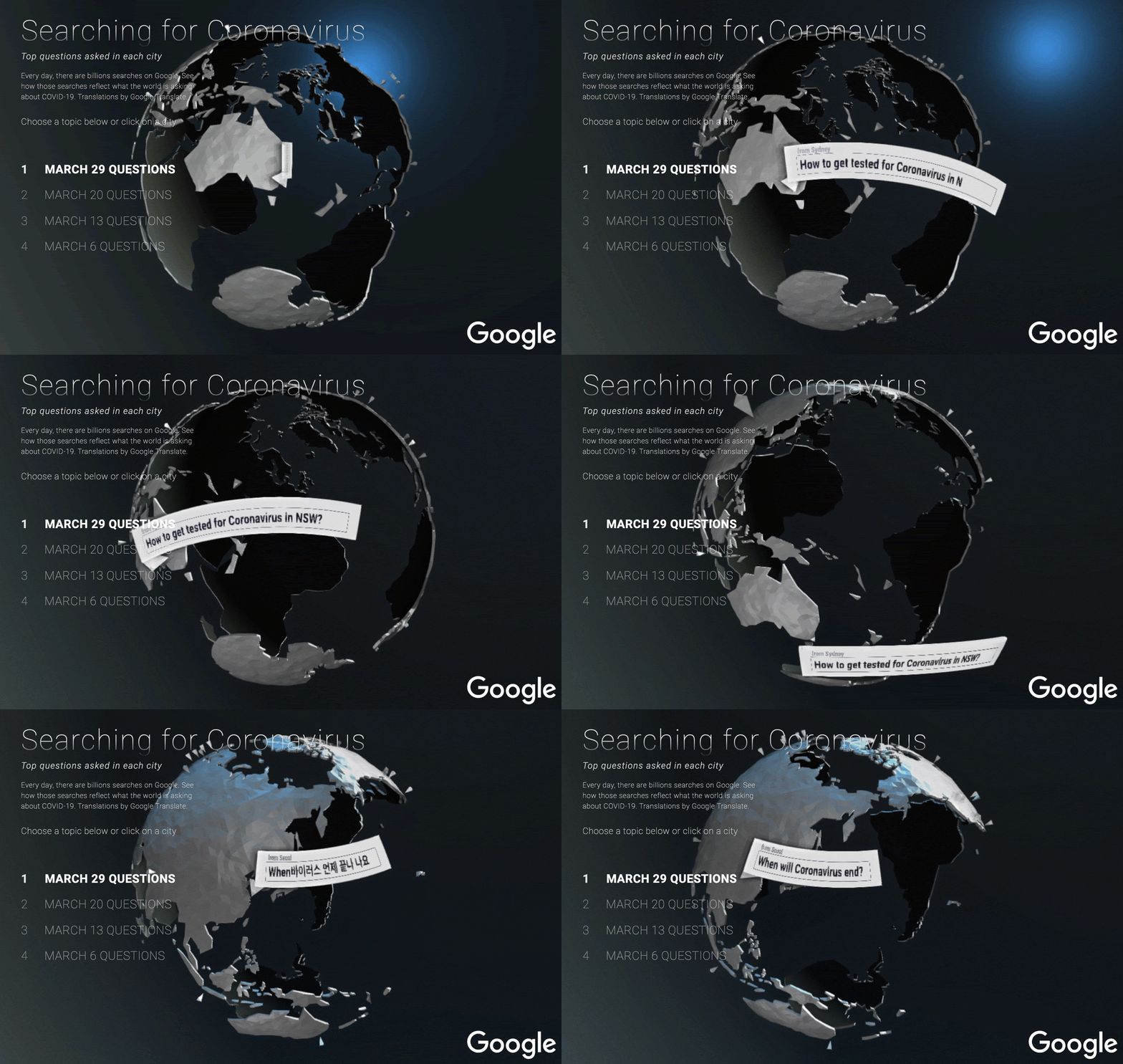
Questions in Search on coronavirus in cities around the world
Fact-checkers and health authorities need help to identify topics that people are searching for and where there might be a gap in the availability of good information online. Unanswered user questions—such as “what temperature kills coronavirus?”—can provide useful insights to fact-checkers and health authorities about content they may want to produce.
To help, we’re supporting Data Leads in partnership with BOOM Live in India and Africa Check in Nigeria to leverage data from Question Hub. This will be complemented by an effort to train 1,000 journalists across India and Nigeria to spot health misinformation.
Our online resources are being updated to support the vital work journalists are doing. The GNI Training Center has tools for data journalism and verification in 16 languages, and our global team of Teaching Fellows is delivering workshops entirely online in 10 languages.
Today's announcement is one of several efforts we’re working on to support those working to cover this pandemic. We look forward to sharing more soon.
by Alexios MantzarlisGoogle News Lab via The Keyword

0 komentar:
Post a Comment