Note: The following is based on an email to employees that Sundar sent earlier today.
As COVID-19 makes its way across the globe, it’s affecting our communities in different ways. Many in Europe and the Americas are just now beginning to experience what people in Asia have been confronting for weeks.
We have set up a 24-hour incident response team to stay in sync with the World Health Organization, and Google’s leaders are meeting daily to make critical decisions about our offices globally.
In doing so, we weigh a number of factors grounded in science, including guidance from local health departments, community transmission assessments, and our ability to continue essential work and deliver the products and services people rely on. We’re also trying to build resilience into our operations—and our products—by testing our own capacity to work remotely. And it is also important to think about how we can help our local communities as we make these changes.
Some of our offices have shifted to a work-from-home status ensuring business continuity, while others are still operating as normal. As we make these changes, we have been making sure that our hourly service vendor workers in our extended workforce who are affected by reduced work schedules are compensated for the time they would have worked.
This is an unprecedented moment. It’s important that we approach it with a sense of calm and responsibility—because we have many people counting on us.
Every day people turn to Google products for help: to access important information; to stay productive while working and learning remotely; to stay connected to people you care about across geographies; or to simply relax with a great video or some music at the end of a long day.
I’ve shared some early examples of what we are doing to help below. As the coronavirus situation continues to evolve, we will be thinking of even more ways we can be helpful to all of our users, partners, customers and communities.
In the meantime, please continue to take care of yourselves and each other.
Helping people find useful information
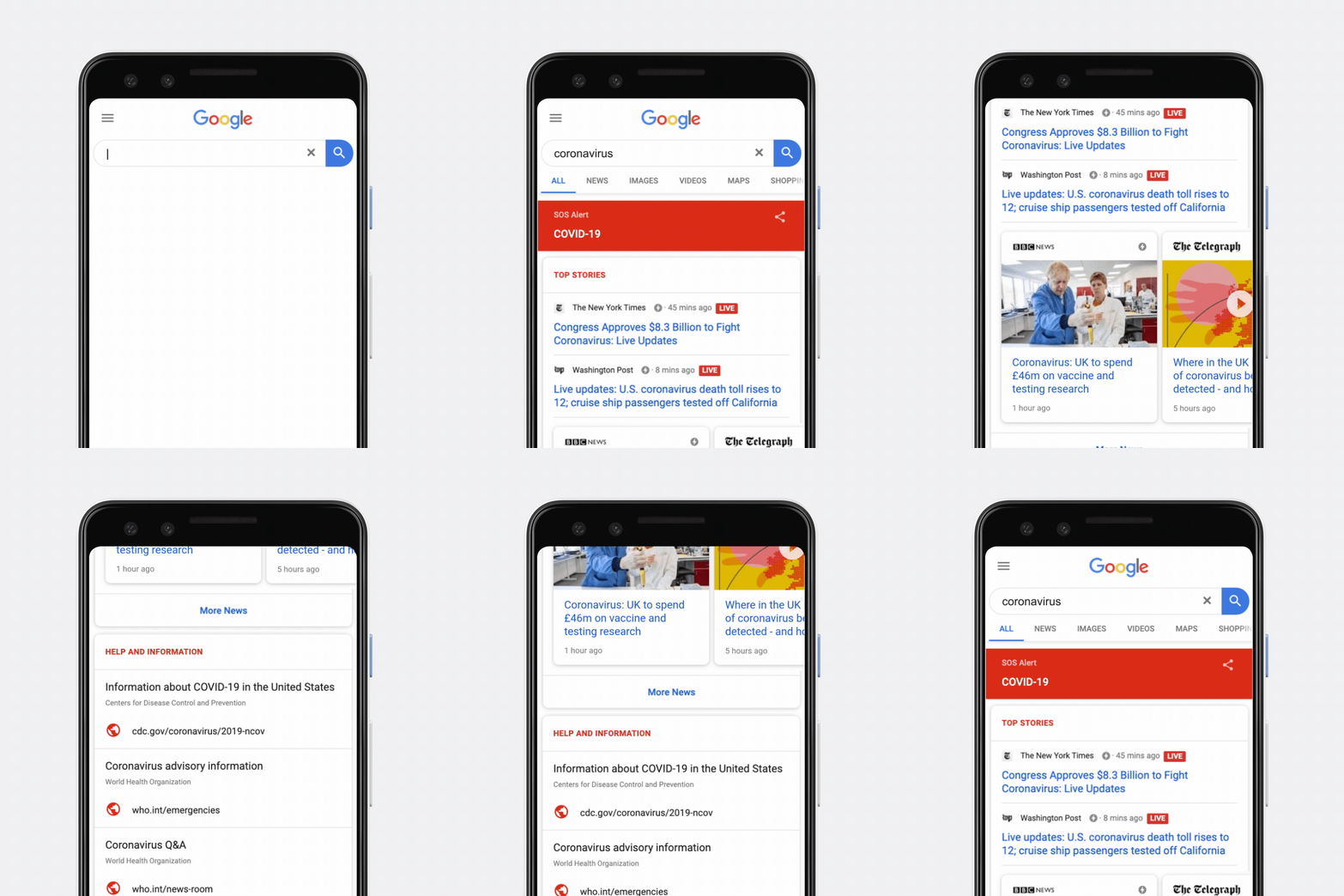
People continue to come to Google to search for vaccine information, travel advisories and prevention tips (for example, search queries for "coronavirus cleaning advice" spiked over 1,700 percent over the last week in the U.S.). Our SOS Alert in Search connects people with the latest news plus safety tips and links to more authoritative information from the World Health Organization (WHO).
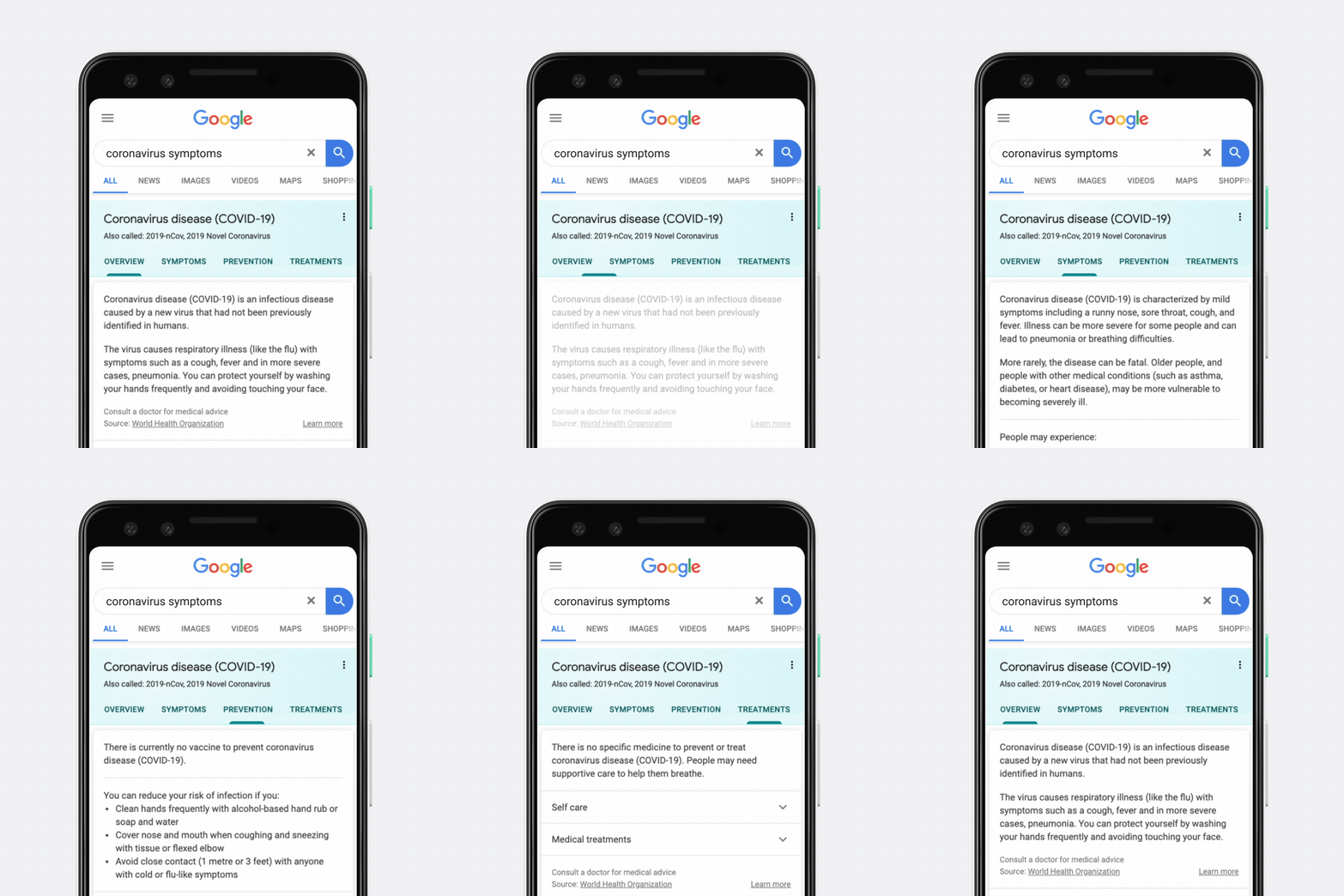
For people specifically looking for information about symptoms, prevention or treatments, we’re working to expand our Knowledge Panels for health conditions to include a COVID-19 panel.
On YouTube, we’ll be using the homepage to direct users to the WHO or other locally relevant authoritative organizations and will donate ad inventory to governments and NGOs in impacted regions to use for education and information. Google Maps continues to surface helpful and reliable local information.

Protecting people from misinformation
Our Trust and Safety team has been working around the clock and across the globe to safeguard our users from phishing, conspiracy theories, malware and misinformation, and we are constantly on the lookout for new threats. On YouTube, we are working to quickly remove any content that claims to prevent the coronavirus in place of seeking medical treatment. On Google Ads we are blocking all ads capitalizing on the coronavirus, and we’ve blocked tens of thousands of ads over the last six weeks. We are also helping WHO and government organizations run PSA ads. Google Play also prohibits developers from capitalizing on sensitive events, and our long-standing content policies strictly prohibit apps that feature medical or health-related content or functionalities that are misleading or potentially harmful.Enabling productivity for remote workers and students
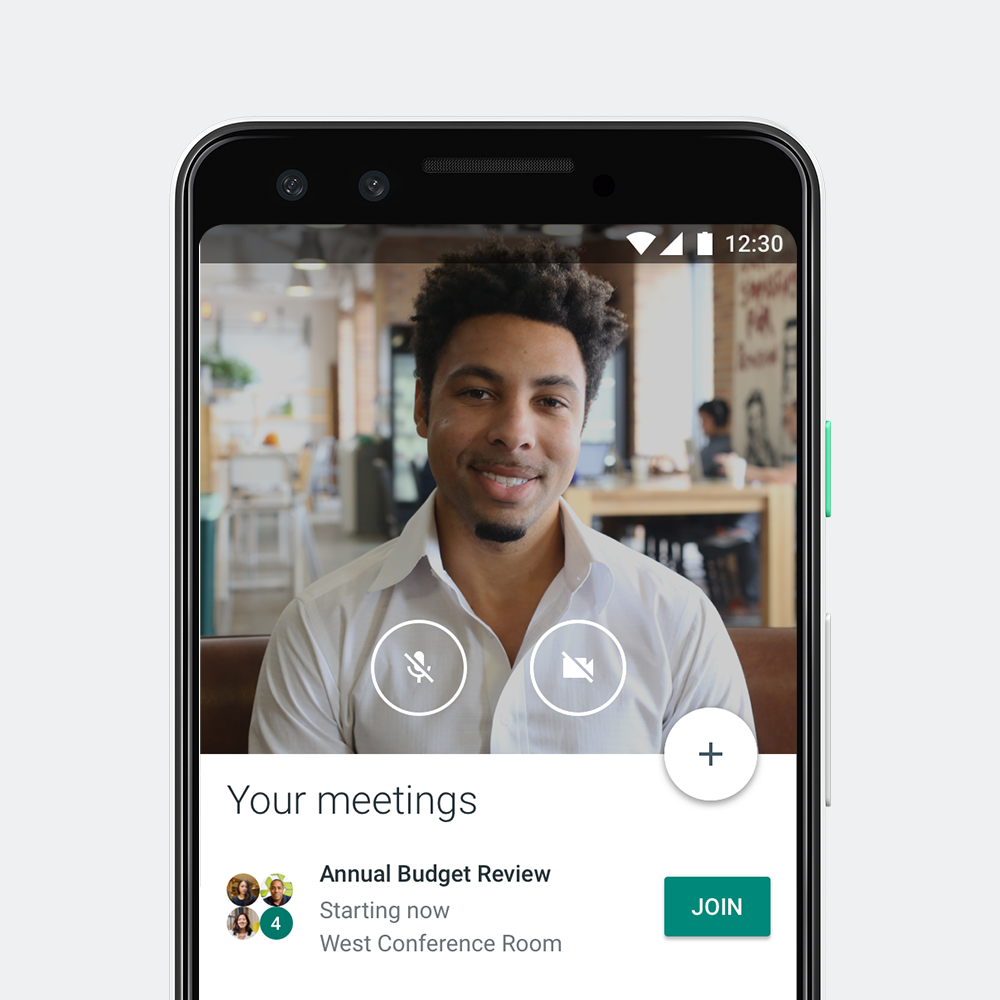
Employees, educators and students are using products like Gmail, Calendar, Drive, Classroom, Hangouts Meet and Hangouts Chat, as well as G Suite for Education, to be productive while working and learning remotely, including hundreds of thousands of students in Hong Kong and Vietnam, where schools have been closed. Starting this week we rolled out free access to our advanced Hangouts Meet video-conferencing capabilities to all G Suite and G Suite for Education customers globally until July 1, 2020. We’re also adding resources to be able to support increased demand for public livestreaming on YouTube. We’ve seen increased interest in affected regions as people look to be able to connect virtually with their communities when they are unable to do so in person.
Supporting relief efforts and government organizations
We're providing $25 million in donated ad credit to the WHO and government agencies, and will provide more if there is a need throughout the year. Google.org and Googlers have donated over $1 million to support relief efforts, which will go towards organizations working to purchase medical supplies, provide frontline workers with food and lodging, support the construction of temporary hospitals, and help with long-term recovery efforts. Google Cloud continues to work with federal, state and local governments to help them connect with citizens and returning travelers from impacted regions. For example, in Singapore, Google Cloud worked with the government to implement a chat bot on their website that helps answer citizens’ most common questions. We’re also working with governments around the globe to help them promote authoritative public information about COVID-19 through our Google Ad Grants crisis relief program.Advancing health research and science
DeepMind used the latest version of its AlphaFold system (building on the protein folding work that appeared in Nature in January) to release structure predictions of several proteins associated with SARS-CoV-2, the virus that causes COVID-19. These structure predictions have not yet been experimentally verified, but the hope is that by accelerating their release they may contribute to the scientific community’s understanding of how the virus functions and experimental work in developing future treatments. Verily is developing a small, body-worn temperature patch that transmits data to a phone application to provide timely notification of fever and support earlier diagnosis and treatment of a viral infection like the flu or coronavirus. This could be especially useful in elderly populations, where viral infections have higher rates of morbidity and mortality.by Sundar Pichai via The Keyword

0 komentar:
Post a Comment