This past spring, I sat with 12 fellow Googlers on beanbag chairs in the basement of Google for Startups Campus in Madrid. The area was outfitted as part conference room, part social gathering space. We took turns going around in a circle, talking about our arrival in Spain the previous day. We’d felt unsure of ourselves and of what we had to offer—but as we talked, we found ourselves getting inspired to step out of our usual comfort zones and try something new.
The dozen of us had been chosen to participate in the Startup Advisors Summit, a program during which Googlers spend two weeks working with startups in London, Madrid, Tel Aviv, Seoul, São Paulo and Warsaw. The program is facilitated by the Google for Startups team, which operates Campuses—dedicated spaces for startups to work, connect and access Google resources—in those cities.
Each morning, my colleagues and I trekked from our hotel on Gran Via past the Royal Palace and down the hill to Campus, where we listened, questioned and observed the startups to learn about the challenges they were facing. From there, we drew on our own expertise to advise in areas where the startups were not yet experts—whether it was communication strategy or data and analytics. We held office hours, hosted workshops, led meetings and participated in Q&A sessions. We helped build product timelines and marketing strategies. We analyzed financial plans and constructed brand identities. (And we all built up a collective appetite for churros, which we enthusiastically gobbled up each night at the local chocolateria.)
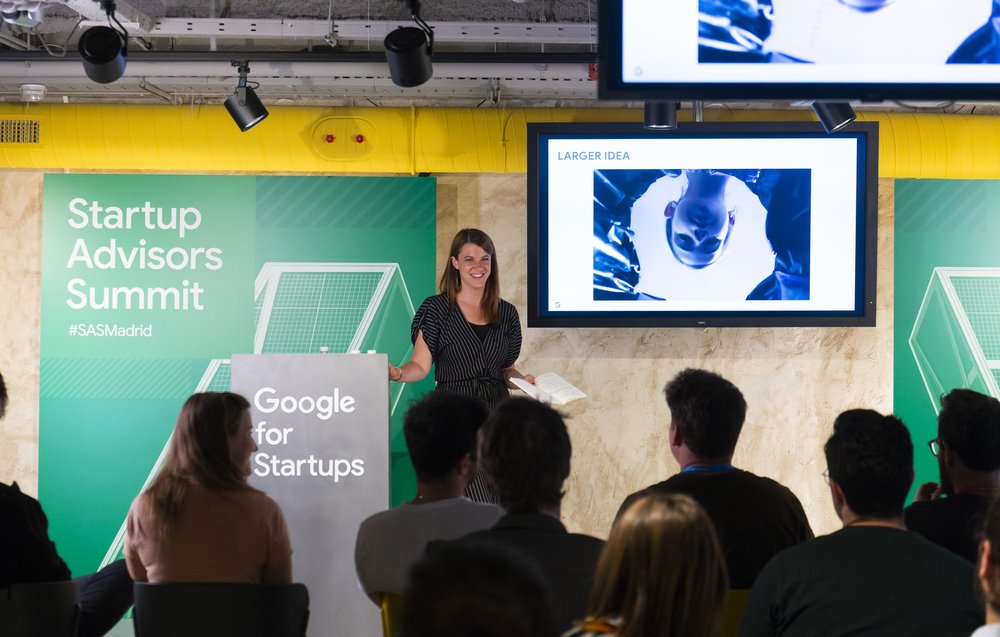
The author, teaching startups how to tell their companies’ stories.
My area of expertise focused on storytelling, and I worked with a number of different startups to refine their tactics. I wrote a video script with the founders of Routive, a travel guide company that specializes in guided car tours through Southeast Asia. I designed a social media program with the CEO of Adopta un Abuelo, a network that connects young volunteers to work with elders who might otherwise feel isolated. I edited website copy with the duo behind Doinn, a platform for house cleaning services. And I taught a group of 35 local entrepreneurs about storytelling, and how it can apply to their companies.
Gabriel Domínguez, Routive’s founder, was developing the company’s new website with his team when they entered the Google for Startups residency program, which includes two weeks dedicated to the Startups Advisors Summit. During that time, they designed a complete site structure and a strategy to expand it globally. “The Startup Advisors Summit was the best part of the Google for Startups Residency program for us,” he said. “We even redefined our business mission for the future.”
Sofia Benjumea, who runs Google for Startups in Spain, described the summit as a “win-win” for Googlers and startup founders alike. The founders get access to an experienced cohort of tech professionals who can provide unique insights and consulting. The Googlers push the limits of their own knowledge base, learn new leadership skills that then serve them well when they return to their core roles, and, of course, make new friends (and eat churros).
The Google for Startups residency runs at six locations around the world, offering tailored mentorship and workplaces to growing companies. Residents also receive access to Google products, connections and trainings. If you’re interested in learning more about the program, the fourth edition of the Google for Startups Residency in Madrid will start in February, and applications are open until November 15. For more information on programs run at Google for Startups’ campuses, check out the program’s global website.
by Carly Schwartz via The Keyword

0 komentar:
Post a Comment