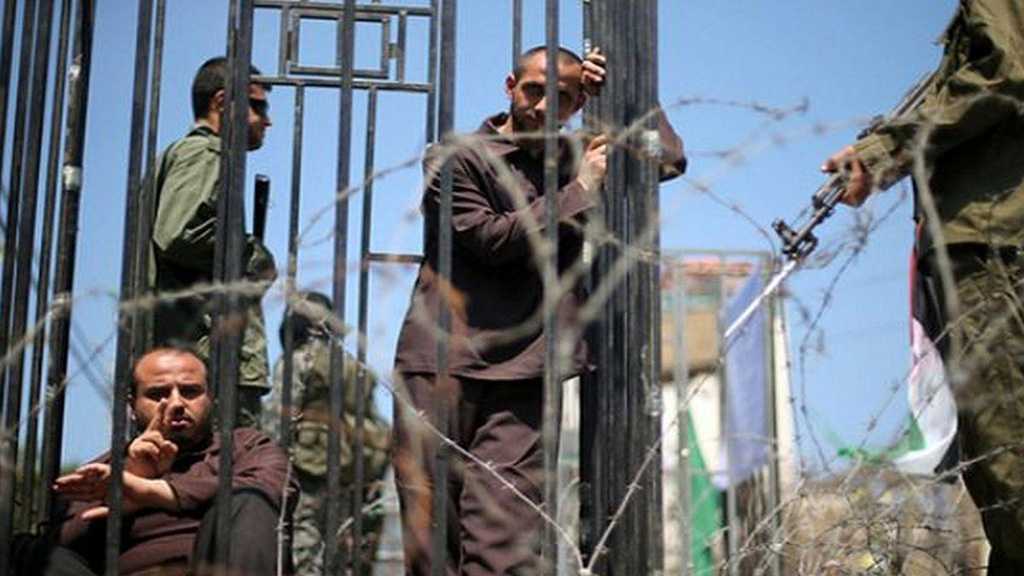
Here’s what happened on the night of March 24 in Ketziot Prison in Al-Naqab:
Far from the eyes of the public: 100 Palestinian prisoners, bound hand and foot with plastic handcuffs, were thrown to the ground, beaten with clubs and shot with Tasers. When morning broke, the plastic cuffs were replaced with steel ones, and they were shackled to one another in pairs. They were left like that for a day and a half, under the open sky in the desert cold, without water, without food, without toilets. Most were wounded, some were bleeding. The rain that fell on them mingled with the blood flowing from their injuries.
They were wounded when Special Forces of the “Israel” Prison Service, Border Police and regular police force – a total of about 300 warders and officers – invaded their wing.
The situation had become particularly fraught between the Ketziot warders and the prisoners after the latter’s cellphones were jammed – by means of measures that terrified the prisoners because of their perceived radiation hazard, and infuriated them as well because now they were even more cut off than ever from their families. Afterward came the stabbing and then the brutal acts of punishment and revenge by the IPS and police forces against the inmates in wing A-4. They used Tasers and clubs on nearly every prisoner in the wing. Dozens were wounded, eight were taken to the hospital by helicopter.
Very little about these events was reported in the media. This week, however, an opportunity arose to hear a full report about what actually happened last month, from a prisoner who was released from Ketziot two weeks ago. He, too, was wounded in the furor and needed hospital treatment even after his release.
Mohammed Salaima, his wife, Ruseila, and their two children – 2-year-old Yazar and 8-month-old Mayis, who was born while her father was in Ketziot – live in a small one-room apartment in the neighborhood of Jabel Kurbaj in Al-Khalil [Hebron]. He’s a smiling, stocky baker of 25.
On March 29, five days after the unrest broke out at Ketziot, Salaima finished his jail term and returned home. For three hours, Salaima described the events of the night of March 24, which he referred to as the “night of the crimes” and the “night of the atrocity.”
The trouble began with the announcement of the installation of jamming devices on February 18, in wing A-4 where more than 110 prisoners are housed in six tents. At the time, there were three or four smuggled cell phones in the wing, and the inmates used them in rotation: A prisoner could make one 15-minute call every three days.
The prison warders informed the inmates about the jamming devices, Salaima says, confirming that the decision was made by “Israeli” Prime Minister Benjamin Netanyahu and Public Security Minister Gilad Erdan, ahead of the election on April 9, as a show of their toughness with Hamas detainees.
The prison management announced that a search would be carried out in wing A-4 and that the inmates would be moved elsewhere while it was being conducted. There were now about 100 prisoners in the cellblock, some having been released in the meantime. At first, “Israeli” service claimed that the move would only last for two hours. Then they said it was for the night, but ultimately the inmates were ordered to take their gear with them because they were being moved to wing A-3, which had been evacuated, for two weeks. The transfer proceeded quietly at first, with 10 inmates walking over at a time, until only a few detainees remained in A-4.
The whole transfer procedure was accompanied by members of Special Forces from the IPS and the police: Masada, Yamam, Yamar and Keter. Now they burst inside, forcibly. Some 300 of them were arrayed against the inmates, most of them already in A-3, a few still in A-4. Not one prisoner escaped the blows of the clubs or the Taser, says Salaima, adding that the beatings were indiscriminate and that they turned the prison wings into a battlefield. Forty-five inmates were wounded. He tried to hide in a corner but was clubbed; the scars on his forehead and his nose testify to that.
“They broke legs, arms, noses, chins, ribs,” he says, about the Special Forces that had been brought in. “Masada shot, and Yamar, Yamam and Keter did the beating.” About 340 Taser shells were fired at the Palestinian Prisoners, and around 15 to 20 dogs also took part in the operation to suppress the prisoners, and wounded a few of them. The melee lasted for three or four hours, into the night, according to Salaima.
That was followed by the shackling of prisoners’ hands and feet, who were then left outside, under the nighttime sky. For 36 hours the inmates remained like that – bound, hungry, thirsty, bruised, and exposed to the cold, on the ground.
Related Videos
from Respect http://bit.ly/2PbZY7l
Breaking News: A Night of Atrocities at “Israeli” Prison: Bleeding Palestinians Left in Rain with No Food or Toilets - News Paper

0 komentar:
Post a Comment