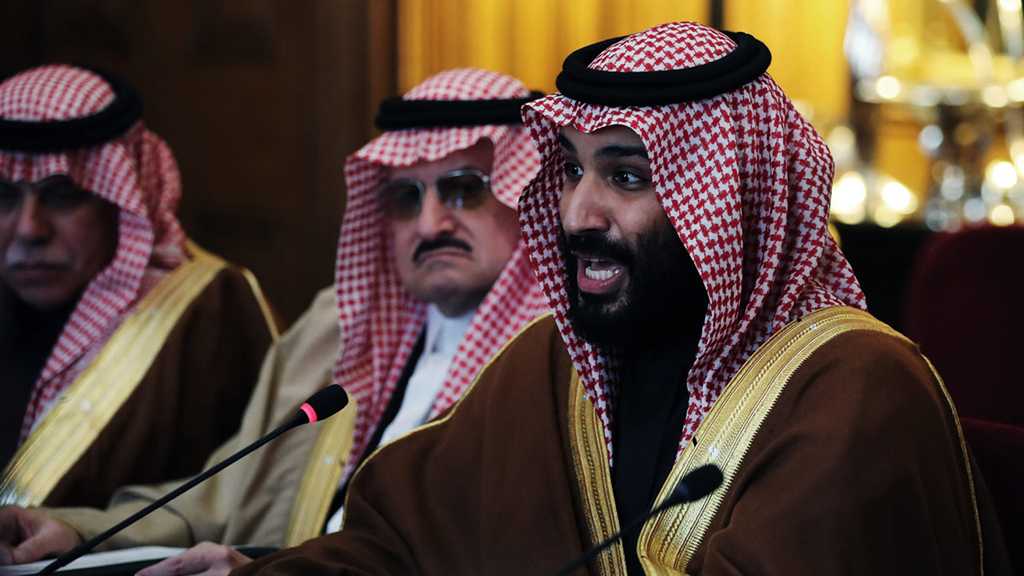
June 24 marked a historic occasion in Saudi Arabia, as the government finally granted women the right to drive a car. The change was announced in September 2017, and women started receiving licenses in early June. The reform is part of a larger modernizing agenda set by Crown Prince Mohammed bin Salman (MbS), the heir apparent to the throne, who hopes to transform the country and diversify its economy.
Central to his agenda is “Vision 2030”, an initiative to transform the Saudi economy through privatization and restructuring, in the hope of lessening its reliance on oil production. Vision 2030’s main attraction is “Neom”, a 26,000 square kilometer city to be built on the coast of the Red Sea, near the border with Egypt.
The Saudi government is banking on Neom to transform the country into an economic powerhouse. An official press release says the city will help “the country develop into a pioneering and thriving model of excellence”. On its face, this all sounds very exciting and progressive. But previous efforts by the Saudi government, as well as economic and institutional constraints, cast serious doubt on whether the project will succeed.
What makes Neom, and Vision 2030 generally, problematic is that it’s a top-down, centrally-directed plan — an attempt by the Saudi government to steer the economy in a specific direction. Saudi Arabia will front $500 billion to support Neom’s construction, with the hope of attracting other investors from around the world. It will be a special economic zone (SEZ), with a unique legal and regulatory environment, autonomous from the rest of the country.
SEZs are most notably associated with China and the success they had in the 1980’s as part of the country’s economic reforms. One of the most stunning cases illustrating a SEZ’s transformational power is the city of Shenzhen, a small town of less than 30,000 in the late 1970s. In 1980, various districts of the city were designated as SEZs. Shenzhen’s population now exceeds 10 million and it is a major financial center. Not every economic zone is created equal though and emulating the Chinese success stories requires more than copying and pasting a low-tax regulatory environment in another region.
What made the Chinese SEZs successful was their more decentralized, bottom-up nature, according to Lotta Moberg, a macroeconomic analyst at William Blair and author of The Political Economy of Special Economic Zones: Concentrating Economic Development. “What you had in China were business interests and others who wanted to do business between China and Hong Kong,” she told me in an interview. “They managed to lobby the right people who would reach the upper echelons of the government to grant these kinds of concessions.”
Shenzhen’s reforms were not driven by the central state, instead, it was a product of local interests and local lobbying. “The institutional foundations of the Chinese examples created different dynamics from what is likely to occur in Neom, which is largely directed by the government,” said Moberg. Shenzhen was a response to demand, whereas Neom is an attempt to solve the ruling family’s political problems.
We’re already seeing signs that should give the Saudis some pause. Foreign direct investment, which is essential to financing Neom in the long term, is at a 14-year low. It shrank to $1.4 billion in 2017, from $7.5 billion the year before.
King Abdullah Economic City (KAEC) offers another warning. It was the only one of six mega-city projects announced in 2005 that actually ended up being built, but has struggled to bring in foreign investors and is described by the FT’s Ahmed Al Omran as “eerily quiet and empty”. By 2035, the Saudi government wants KAEC to be home to 2 million people. According to Omran, its population currently sits at just 7,000. KAEC will need to add roughly 120,000 people a year consistently to hit its target.
Neom represents a “hail Mary pass” by the Saudi government, says James Gelvin, a professor of modern Middle Eastern history at UCLA. “There is a sense of insecurity on the part of the Saudi ruling family,” he told me. “One reason for that is the collapse of the price of oil between 2014 and 2016. Although that is rising at the present time, the Saudis see the writing on the wall”, with regard to the long-term ability to rely on oil revenue.
More than half the Saudi population is under 25, and economic prospects for the young are grim, according to Gelvin.
“There are not enough jobs for them, the educational system is not very good and there has to be revitalization, particularly at a time when the future of oil is insecure,” said Gelvin.
Ultimately, Saudi Arabia is not well-equipped to transform into a market economy, which means Neom’s lofty goals look unattainable.
“80 per cent of the economy is dominated by the government, and obviously the largest revenue is oil,” said Gelvin, and “on top of that, corruption is already legendary in Saudi Arabia”.
Although MbS recognizes the need to transition away from the economic status quo, development requires more than a lax regulatory environment and tax breaks. Business climates have to be complemented by institutions conducive to growth, both formal and informal, which Saudi Arabia sorely lacks. The state-driven nature of Neom also makes it ripe for under-performance. MbS can’t eliminate decades of institutional path-dependence, history and basic economic reality just by carving out some land in a scenic locale and saying “we’re open for business.”
Source: CAPX.com
from Respect https://ift.tt/2JMMYAR
Breaking News: Saudi Arabia’s Mega-City Project Is Doomed to Failure - News Paper

0 komentar:
Post a Comment